
What Should I Know About Buying a House With Well and Septic in Maryland?

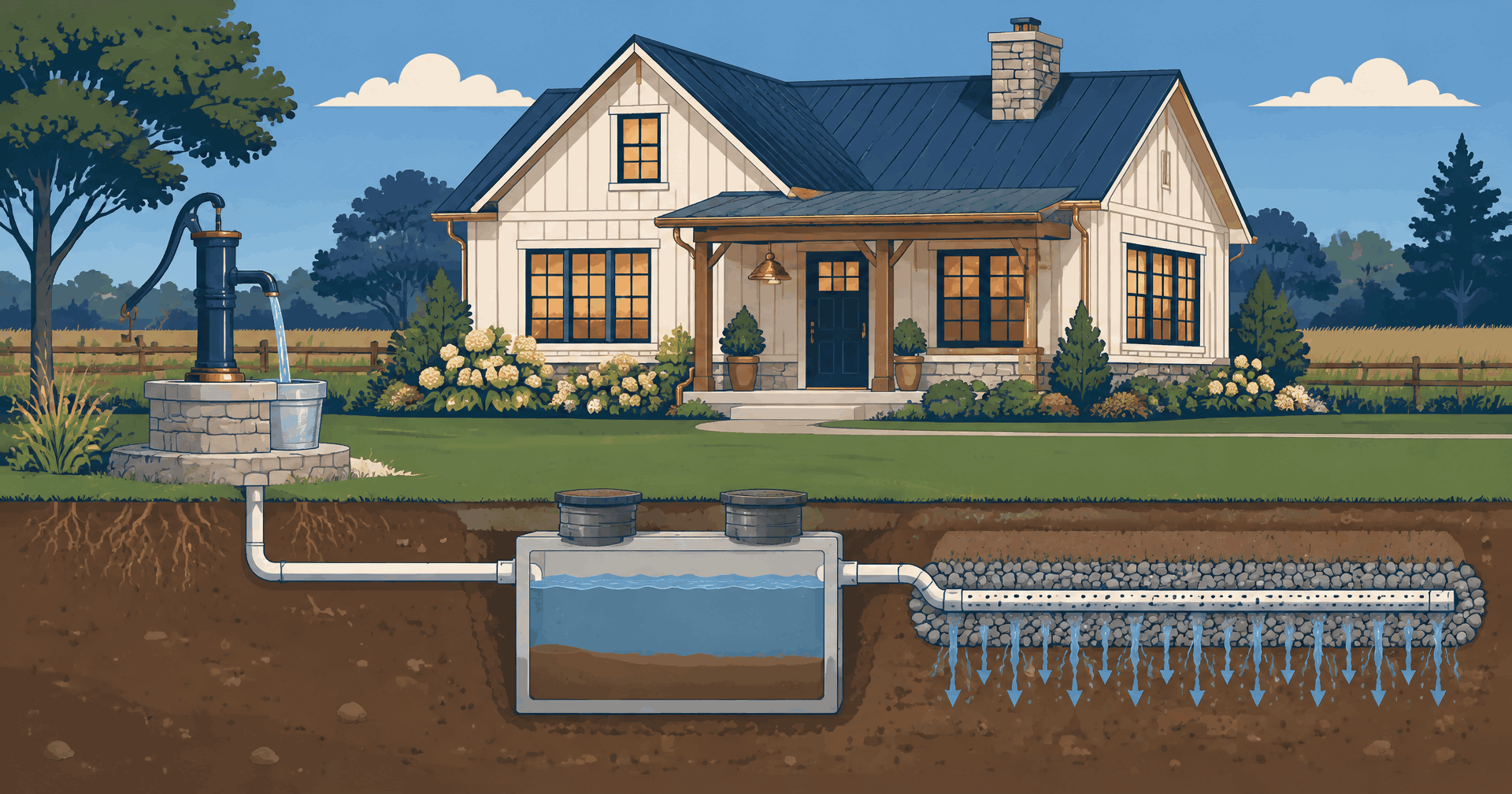
A home with a well and septic system can be a great buy, but you'll want to check both carefully. Plan on a water test for the well, a septic inspection that includes pumping, and a look at records. Rules differ by county, and lenders often require testing, so ask early. These systems are your responsibility after closing, and repairs can be costly.
Why it's different
Homes on public water and sewer have a utility handling those systems. With a well and septic, you own them. Problems like contaminated water, a failing drain field or a worn pump may not show up in a normal home inspection. That's why you'll often add separate tests.
Test the well
- Water quality test. A certified lab typically checks for bacteria like coliform and E. coli, plus things like nitrates and other items depending on the area. Counties have lists of certified labs.
- Flow and pressure. Ask a well professional to check yield, the pump and the pressure tank, and the age of the equipment.
- Location. Wells should be a safe distance from septic systems. The Harford County Health Department's guide, for example, lists a minimum 100 feet between a septic area and a well.
- Records. Ask for well completion reports, past water tests and any permits.
Maryland has also moved toward well inspection requirements at transfer in recent years, so ask your title company or the county health department what applies to your property.
Inspect the septic system
- Licensed septic inspection. Hire a licensed inspector, and ask for the tank to be pumped so they can see inside. Pumping is often part of the process.
- Drain field. A failing drain field can be expensive to repair or replace. Ask about soil, wet spots and past repairs.
- Size and age. Make sure the system fits the number of bedrooms on record. Ask what permits exist for any additions.
- Records. Ask the county health department for permit and repair history.
Maryland lawmakers have considered septic inspection and pump-out requirements at sale. I can't tell you what's in force for your address, so ask the county or your title company.
Build it into your contract
- A well and septic contingency with enough time for lab results, since water tests can take days.
- Clear wording on who pays for the pumping and any repairs.
- Your lender's requirements, since some require passing tests before closing.
If problems appear, you may be able to ask the seller to repair, credit you, or you may decide to step away. I covered what to do when inspections find septic or mold issues.
Costs to expect after closing
Plan for pumping every few years, pump or pressure tank replacement, and eventually septic repairs. A good rule is to build these into your maintenance budget. Ask local professionals for current prices instead of relying on averages.
What I'd do
Add the tests early, use licensed local pros, and keep copies of every report. For help with the process, see my inspections page, buyers page, or contact me. You can also book a 15-minute call.
FAQ
Does a regular home inspection cover well and septic?
Usually not in depth. You'll typically hire separate specialists.
Who pays for the septic inspection?
It's negotiable and set in the contract. Ask your agent how it's usually handled in the county.
Can a bad septic system kill the deal?
It can, depending on cost and your contract. Many buyers negotiate repairs or credits.
How often should a septic tank be pumped?
It depends on the tank size and household use. Ask your inspector for a schedule.
Categories
Recent Posts