How Much House Can I Afford Without Being House Poor?

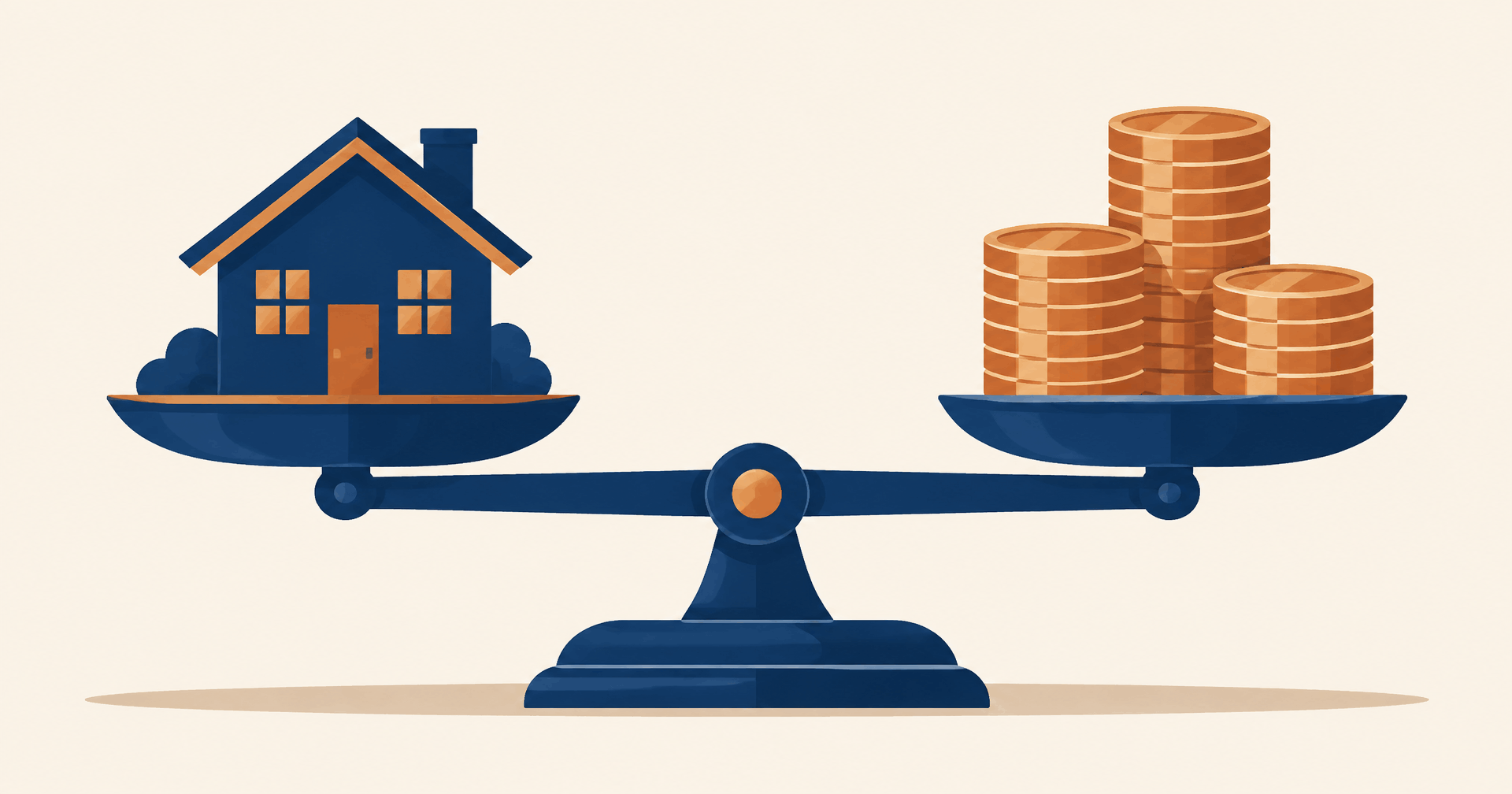
The amount a lender approves you for is usually more than you'd feel comfortable paying. A common starting point is to keep your total housing payment near 28% of your gross monthly income and all your debts near 36%. Then test that payment against your real take-home pay, repairs and a cash cushion. That last step is what keeps you from feeling house poor.
Why the approval number can be too high
Lenders look at your gross income (before taxes) and the debts on your credit report. They don't see your childcare costs, your retirement saving, your commute, or how you feel about risk. Fannie Mae and Freddie Mac loans commonly allow total debt-to-income ratios up to about 45%, and sometimes higher with strong credit and reserves. FHA is often around 43%. Those are what a lender may allow, not what's wise for your budget.
The Consumer Financial Protection Bureau's budgeting guidance points to a lower range: housing around 28% to 35% of gross income, and total debt at 36% or less, with a note that some lenders go to 43% or beyond.
A simple way to run your own numbers
Say a household earns $90,000 a year. That's $7,500 a month before taxes.
- Housing at 28%: about $2,100 a month for principal, interest, property taxes, homeowners insurance, mortgage insurance and any HOA or condo fee.
- All debts at 36%: about $2,700 a month, including that housing payment plus car loans, student loans and credit card minimums.
- At 43%: about $3,225 a month. A lender may approve it, but it leaves much less room after groceries, utilities, gas and everything else.
These are illustrations, not a quote. Your rate, down payment and taxes will change the answer. In Maryland, property tax and insurance can vary a lot between counties, so I like to price the full payment on a specific home, not a generic one.
The take-home pay test
Ratios use gross pay. Your bank account doesn't. Try this:
- Start with your monthly take-home pay.
- Subtract the full estimated housing payment.
- Subtract everything you already spend: debts, food, utilities, insurance, gas, phones, subscriptions.
- Subtract what you want to keep saving each month.
- Look at what's left. If it's thin, the payment is too high, no matter what the lender says.
Don't forget what comes after closing
Buyers often budget the mortgage and forget the rest. Set aside money for:
- Repairs and maintenance. Many people plan on 1% to 2% of the home's value each year, and older homes may need more.
- Cash reserves. The CFPB and Fannie Mae-related guidance often mention a few months of expenses. I'd rather you keep three to six months of expenses after closing, if you can.
- Closing costs. The CFPB says these commonly run roughly 2% to 5% of the price, plus prepaid items.
- Moving and basics. Furniture, window coverings, a lawn mower, and so on.
I've written more on how much to keep in reserve after your down payment and setting your payment below your pre-approval.
Signs you're stretching too far
- You'd need overtime or a bonus to make the payment.
- One surprise repair would go on a credit card.
- You'd stop contributing to retirement or savings.
- The payment only works if rates drop and you refinance. Nobody can promise that, so don't count on it.
What I tell my buyers
Pick the payment first, then the price. Tell your lender the monthly number you're comfortable with, and ask them to show you the price range that fits it, with taxes, insurance and mortgage insurance included. If you'd like help building that range, my buyer page has resources, or you can book a 15-minute call and we'll go through your numbers together. You can also contact me here.
FAQ
Is the 28/36 rule a hard rule?
No. It's a guideline. Lenders often approve higher ratios, but the guideline is a safer place to start.
Should I use gross or take-home pay?
Lenders use gross pay. For your own comfort check, use take-home pay too.
Does a bigger down payment help?
Usually, yes. It lowers the loan amount and may remove or reduce mortgage insurance, which lowers the monthly payment.
What if I'm already above 36% with my debts?
You may still qualify, but paying down a car loan or credit card before you apply can lower your ratio and your payment.
Do HOA fees count?
Yes. Lenders include HOA and condo fees in your housing payment, and so should you.
Categories
Recent Posts