How Much Should I Budget for Home Maintenance and Repairs After Buying?


A common rule of thumb is to set aside 1% to 3% of your home's value every year for maintenance and repairs. On a $400,000 house, that's roughly $4,000 to $12,000 a year, or about $333 to $1,000 a month. Newer homes tend to sit near the low end. Older homes, or homes with big systems near the end of their life, tend to sit near the high end. That's a planning rule, not a promise, so use it as a starting point.
If that number made your stomach drop, you're not alone. Worrying about surprise repairs is one of the most common things I hear from buyers, and it's a smart worry to have before you make an offer.
Three ways to estimate it
- The percentage rule. Save 1% to 3% of the home's value each year. Many sources stretch the range up to 4% for homes more than 30 years old.
- The square-foot rule. Save about $1 per square foot per year. A 2,200 square foot house would be roughly $2,200 a year.
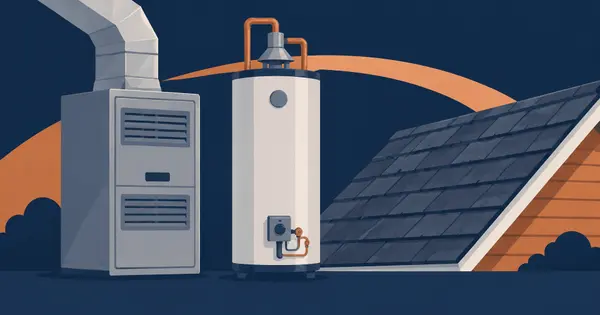
- The age-of-systems rule. Look at the roof, furnace, air conditioner and water heater, figure out how many years each has left, and divide the replacement cost by those years. This is the most accurate of the three because it's based on your actual house.
If you want a safe plan, compare the percentage and the square-foot numbers and use the bigger one.
What typically wears out, and when
Lifespans vary a lot by quality, climate and upkeep, but commonly cited ranges look like this:
- Tank water heater: about 8 to 12 years
- Furnace: about 15 to 20 years
- Central air conditioner: about 10 to 15 years
- Asphalt shingle roof: about 20 to 30 years
- Dishwasher, refrigerator and similar appliances: roughly 9 to 13 years
Replacement costs depend on your home and the contractor, so get real quotes. One published planning guide puts the monthly reserve for a roof, HVAC, water heater and appliances at roughly $110 to $300 a month for a typical single-family home, and that's before routine services.
Where to find your house's real clock
Your inspection report is the best tool you have. Most reports list the approximate age of the roof, furnace, air conditioner and water heater, or you can read the manufacture date on the label. Write those dates down in week one. If two systems are due in the same few years, start saving earlier and more aggressively.
How to build the fund without panic
- Open a separate savings account just for the house and automate a monthly transfer.
- Count the monthly amount as part of your housing cost when you decide what payment you're comfortable with, next to principal, interest, taxes and insurance.
- Keep your emergency fund and your repair fund separate when you can. They protect you from different things.
- Schedule the cheap stuff: an annual furnace or AC tune-up and clearing gutters often costs far less than the repair it prevents.
- If you can negotiate, ask for a seller credit or price adjustment for items the inspection flags as near the end of life. Not every seller will agree, and in a competitive situation you'll have to weigh that.
Before you make an offer
Ask me to pull the age of the major systems when we're looking at homes, not after the inspection. A house that's priced a little lower because the roof and furnace are old might cost more in the long run than a pricier house with newer systems. We can do that math together. You can read more about how I help buyers on my buyer page, or book a 15-minute call if you'd like to run the numbers on a specific house. I'm also happy to talk through inspections on my inspections page.
A note on sources
The 1% to 4% range and the system lifespans come from general homeowner guidance (State Farm, InterNACHI and NAHB life-expectancy data as reported by lenders and home-service publishers). They're averages, so your actual costs may be higher or lower.
FAQ
Is the 1% rule enough?
It can be for a newer home in good shape. For an older home, or one with aging systems, many people plan for 2% to 3% or more.
Should I count maintenance in my monthly budget before I get preapproved?
Yes. A lender counts principal, interest, taxes and insurance. It doesn't count the repair fund, so you'll want to add that yourself.
Does a home warranty replace a repair fund?
Not really. Warranties have limits and exclusions, so read the contract carefully. I cover that in my post on whether a home warranty is worth it.
What if I buy and something breaks in month two?
That's exactly what the fund is for. If it's something the seller should have disclosed, talk to your agent and a real estate attorney about your options.
Categories
Recent Posts