Can I Sell My House and Not Buy Another One?

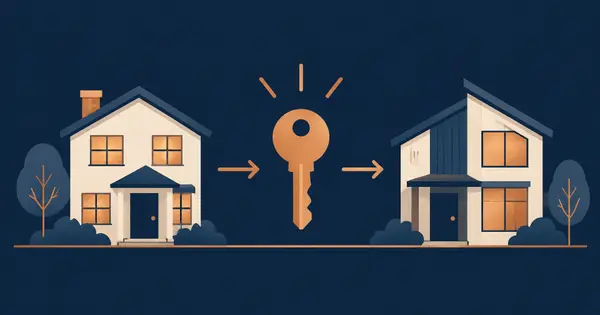
Yes. Nothing requires you to buy another home after you sell. Plenty of people sell and rent, move in with family, downsize into a senior community, or relocate and wait. The questions that matter are where you'll live, what the sale will cost you in taxes and fees, and how you'll protect the money afterward.
Where will you live between closing and what's next?
This is the part people forget to plan. Write down the timeline:
- Contract date. When do you accept an offer?
- Closing and possession. When do you have to be out? In Maryland that's negotiated in the contract. You can ask for extra days after closing, though the buyer has to agree. I covered that in my post on negotiating extra move-out time.
- Your next place. Do you have a lease or a rental lined up, and is there a gap?
If you're not sure where you'll land, tell me early. We can write the contract with a later closing or a short rent-back to give you time.
Taxes: the big one
If the house has been your primary residence for at least two of the last five years, federal law generally lets you exclude up to $250,000 of gain, or $500,000 if you're married filing jointly. Gain above that may be taxable, and there are special rules for partial exclusions, rental use and depreciation. Maryland also has transfer and recordation taxes at closing. I'm not a tax advisor, so please check with a CPA, and see the IRS Publication 523 on selling your home.
What will you net?
Start with the sale price and subtract:
- Your loan payoff
- Agent commission (negotiable)
- Seller closing costs, including transfer and recordation taxes that apply
- Repairs or credits you agree to
- Prorated taxes and other adjustments
That number is your estimated proceeds. I can build you a net sheet for your home. See my post on how much you'll net selling in Maryland.
What to do with the money
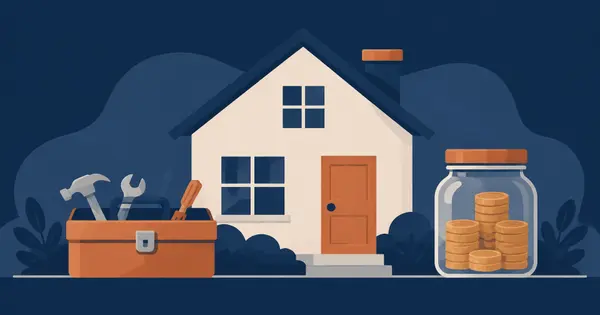
This is your decision, and I'd talk with a financial advisor. Common options people think about:
- Paying off other debt
- Keeping an emergency cushion in a savings account
- Putting some into investments
- Saving for a future purchase
Keep in mind that rents, interest rates and home prices can change. Freddie Mac's 30-year fixed rate averaged 7.28% on November 19, 2026, up from 7.11% the prior week and 6.26% a year earlier, so buying later may cost more or less than buying now. Nobody knows, so avoid planning around a prediction.
The trade-offs
Pros of selling and renting: more flexibility, no maintenance or property taxes, less money tied up in one asset.
Cons: rent can go up, you no longer build equity in a home, you may face moving costs twice, and if you buy later you'll start fresh with new closing costs.
Questions to ask yourself
- How long might I rent? One year? Five?
- What happens to my monthly cost if rent rises?
- Do I have a plan for my savings that I'm comfortable with?
- If I decide to buy again, what would I need to qualify?
If you're thinking about selling, I'm happy to talk through the numbers with no pressure. Start with a home value and pricing review on my pricing analysis page, look at my seller page, or book a 15-minute call.
FAQ
Do I have to buy another house to avoid paying taxes?
No. The old rule that required buying a replacement home no longer applies to primary residences. The exclusion is based on ownership and use, not on buying again. A tax professional can confirm how it applies to you.
Can I stay in the house after closing?
Only if the buyer agrees to it in writing, usually for a short period.
Should I sell now or wait?
It depends on your plans, your equity and the market. Based on what I'm seeing, there's no guaranteed best moment, so it's better to plan around your goals.
Where do I put the money while I decide?
Talk with a financial advisor. Many people use a high-yield savings account for short-term cash.
Categories
Recent Posts