What Does an Appraisal Gap of $5,000 Mean When Buying a House?

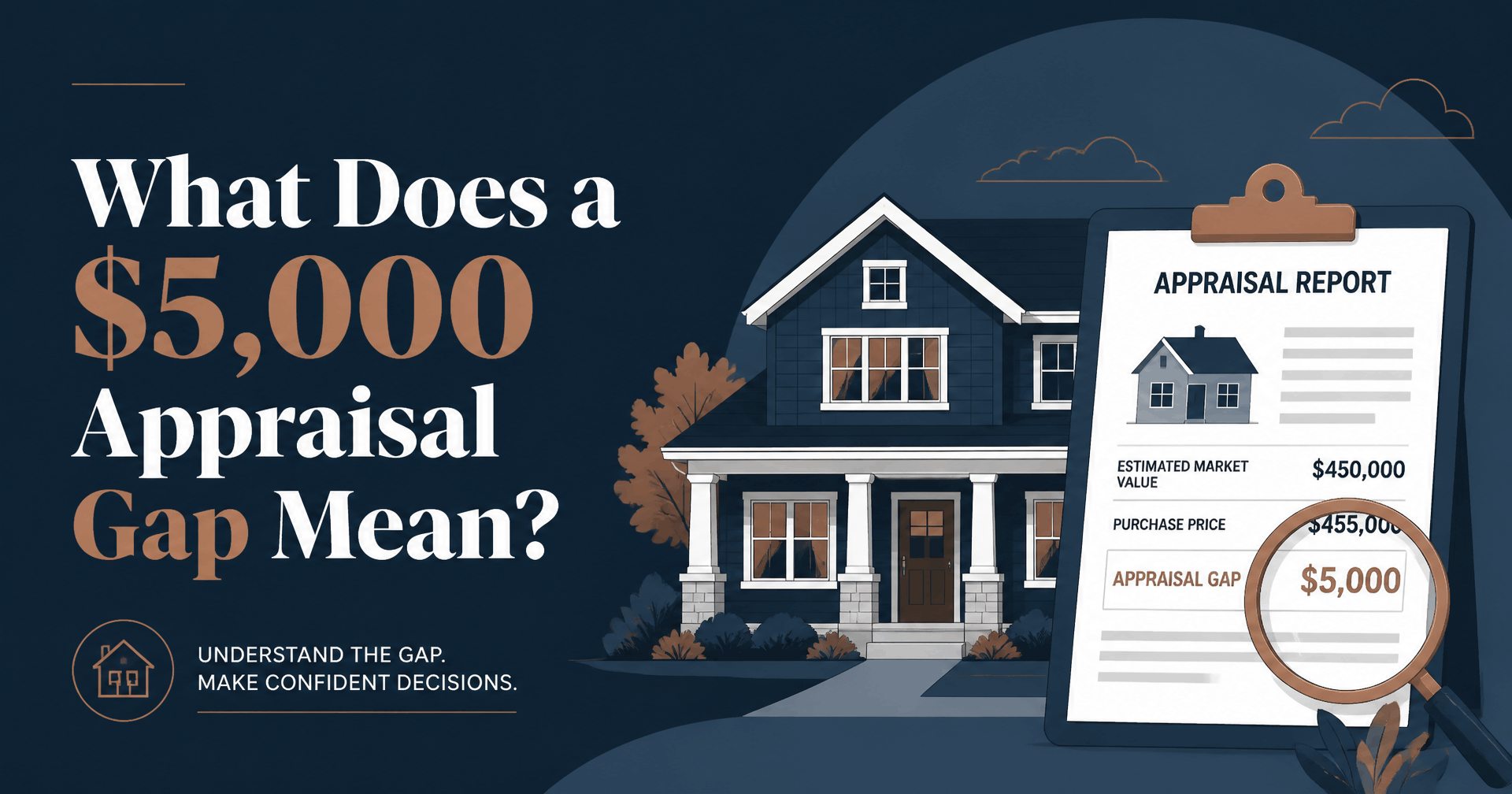
An appraisal gap of $5,000 means the home appraised for $5,000 less than the price you agreed to pay. Your lender will base the loan on the lower number, so someone has to cover the difference or the deal gets adjusted. It doesn't automatically mean you owe an extra $5,000, and it doesn't automatically kill the deal.
How the gap works
Lenders size a purchase loan on the lower of the contract price or the appraised value. Say you agree to buy at $450,000 and it appraises at $445,000. The lender treats the home as a $445,000 home. If you planned 10% down, your loan math changes.
Here's the example. Planned loan: $405,000 (90% of $450,000). If the lender keeps you at 90% of the appraised value, the loan becomes $400,500. That's about $4,500 more cash from you, not $5,000. Whether you can keep the original loan amount instead depends on the loan program and your lender, and it may change your mortgage insurance. Ask your lender to run both versions.
What are your options?
- Ask the appraiser to review it. If the report missed a comparable sale or has a factual error, your agent can request a reconsideration of value. It isn't a sure thing.
- Renegotiate the price. Many sellers will drop to the appraised value or split the difference, especially on a small gap.
- Pay the difference in cash. If you love the home and have the money beyond your closing costs and reserves, this is a choice, not a requirement.
- Walk away. If you have an appraisal contingency and you're inside the deadline, you can usually cancel and get your earnest money back. Check your contract for the exact terms.
Appraisal contingency vs. gap coverage
With a standard appraisal contingency, a low appraisal gives you room to renegotiate or exit. With appraisal gap coverage, you promise in the offer to pay up to a set amount above the appraisal. If you offered to cover $5,000 and the gap is $5,000, you're expected to move forward. If you waived the contingency completely, you generally lose the right to cancel over the appraisal.
Gap coverage can make an offer more competitive, but it's real money. I'd only offer an amount you could pay without touching your emergency savings or the reserves your lender wants to see.
Should you worry about a small gap?
A $5,000 gap on a $450,000 home is about 1.1%. Appraisals are an opinion of value based on recent sales, so small misses happen. A small gap often points to a pricing conversation. A large gap is a bigger signal to slow down and look at the comps again.
How to plan before you make an offer
- Keep a cash cushion above your minimum down payment.
- Ask your agent to pull comparable sales before you pick an offer price.
- Know your appraisal deadline in the contract.
- Ask your lender what happens to your loan if the value comes in low.
- If you're using FHA or VA financing, ask about the protections that come with those loans.
FAQ
Who pays the appraisal gap?
It depends on your contract and your negotiation. The buyer, the seller, or both can cover it, or the deal can end if you have a contingency.
Can I get my earnest money back if the appraisal is low?
If you have an appraisal contingency and you act within the deadline, you generally can. Check your contract's wording and dates.
Does the lender lend on the price or the appraisal?
The lower of the two.
Can a seller refuse to lower the price?
Yes. Then you can pay the difference, try a review, or use your contingency if you have one.
What is appraisal gap coverage?
A promise in your offer to pay up to a set dollar amount above the appraised value.
Next step
Buying in Maryland or DC? Start with my buyer resources, or contact me and we'll look at the comps before you write an offer. Want to talk it through? Grab a free 15-minute call at calendly.com/michaelwaderealtor/15min. No pressure.
Recent Posts