Should I Rent or Buy? How Do I Compare the Full Costs?

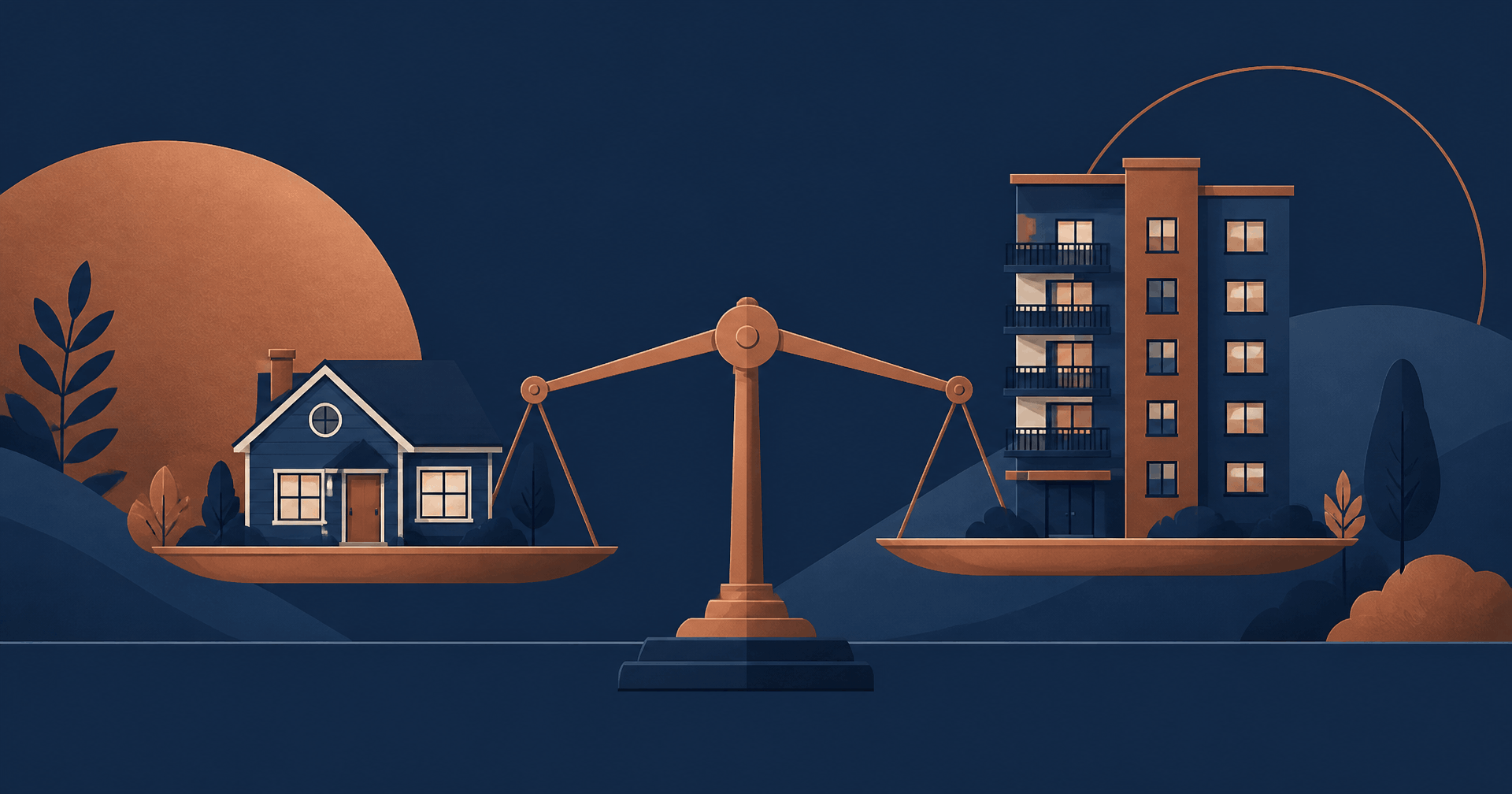
There's no one right answer to rent or buy. It comes down to your full monthly cost, how much cash you'd put in up front, and how long you plan to stay. If you'll likely stay several years and can handle the costs, buying often makes sense. If your plans are uncertain, renting can be the smarter, safer move.
The tricky part is that people compare rent to a mortgage payment and stop there. That's not the full picture on either side.
Step 1: Count the real monthly cost of owning
Your mortgage payment is only part of it. Add these up:
- Principal and interest
- Property taxes
- Homeowners insurance
- Mortgage insurance, if you put down less than 20% on a conventional loan
- HOA or condo fees, if any
- Utilities that might be higher than what you pay now
- Maintenance and repairs
For repairs, a common rule of thumb is to set aside roughly 1% of the home's value per year. That's a rough guide, not a rule, and older homes may need more. My post on how much to save for repairs after buying goes deeper.
Step 2: Count the real cost of renting
Rent isn't just the monthly number either. Add renters insurance, any parking or pet fees, and the likelihood of rent increases at renewal. Be honest about whether your rent has gone up in the past and by how much.
Step 3: Look at upfront cash
Buying takes more cash up front: down payment, closing costs, moving costs, and a reserve for surprises. Renting usually takes a security deposit and first month's rent. Ask a lender for an estimate of your cash to close. Don't drain your savings to get in. Having no cushion after closing is a common regret for new owners.
Step 4: Think about time
Buying and selling a home costs money. If you move after only a short time, those costs can outweigh any gains. A rough break-even point depends on your price, rate, and local market, and nobody can predict it with certainty. A simple question helps: "Can I see myself living here for at least five years?" If the honest answer is "I don't know," that's useful information.
Step 5: Factor in what you can't put in a spreadsheet
- Flexibility. Renting makes it easier to move for a job or life change.
- Control. Owners can renovate and aren't subject to a landlord's decisions.
- Responsibility. Owners handle every repair, including the unexpected ones.
- Stress tolerance. A water heater failing is an inconvenience for a renter and a bill for an owner.
A simple comparison to run
Write two columns. In the first, total your all-in monthly cost of owning from Step 1. In the second, total your all-in monthly renting cost. Then add upfront cash needed for each, and how long you'd stay. If owning costs a bit more per month but you'd stay a long time and keep a healthy reserve, it may still make sense. If owning stretches your budget thin, waiting or renting longer can protect you.
Also keep in mind that you aren't comparing today's rent to a fixed payment forever. Rent can change, and so can insurance and taxes. A fixed-rate mortgage keeps your principal and interest steady, but other costs will move.
Want help running your numbers?
Every situation is different. If you'd like to walk through it, I'm happy to help you think it through with no pressure. Book a 15-minute call, or start with my buyer resources. You can also reach out here.
FAQ
Is renting just throwing money away?
Not really. Rent pays for housing and flexibility, just as ownership costs like interest, taxes, insurance, and repairs pay for housing too. The better question is which total cost fits your plans.
How much should I have saved before buying?
Enough for the down payment, closing costs, and a reserve for repairs and emergencies. A lender can give you a cash-to-close estimate.
How long should I plan to stay if I buy?
Many people look for at least a few years because buying and selling carry costs. The right number depends on your situation.
Should I wait for rates to drop?
Nobody can time rates reliably. Focus on a payment you can afford today and ask a lender what refinancing might look like later, without counting on it.
Does renting longer hurt me?
It depends on your goals. If renting lets you save more and avoid a stretched budget, it can be the right choice.
Recent Posts