Is a Sewer Scope Worth It When Buying an Older Home?

For most older homes, yes, a sewer scope is worth it. It usually costs a couple hundred dollars and shows you the condition of a pipe that a standard home inspection can't see. If the pipe has a problem, you want to know before your inspection period ends, not after closing.
What a sewer scope is
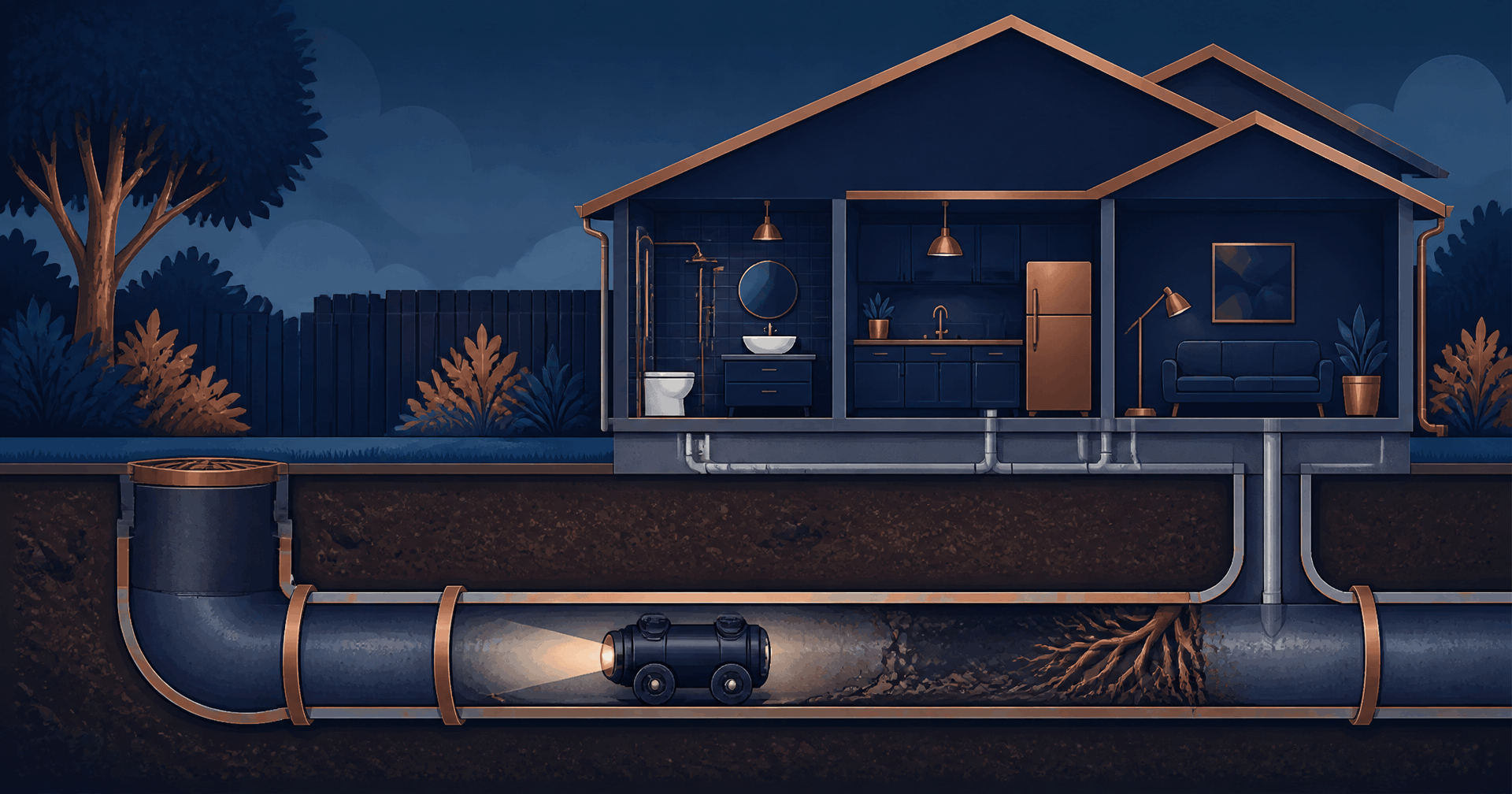
An inspector feeds a waterproof camera on a flexible cable into the main sewer line, usually through a cleanout, and watches a live video feed. The line runs from the house to the street connection or septic tank. It's a visual look inside the pipe. It isn't a pressure test, and it won't tell you about the soil around the pipe (Total House Inspection).
A standard home inspection covers visible plumbing like fixtures, supply lines, and drains. It can't evaluate the buried line, so the scope is a separate service (Upchurch Inspection).
What it costs
Prices vary by area and access. Sources I checked put most scopes in roughly the $150 to $400 range. One inspector group cites $100 to $250 and another puts the national range at about $125 to $500. A scope added to a home inspection visit is often cheaper than booking it alone. Ask your inspector for a local price.
What it can find
The common findings are:
- Tree roots growing into joints or cracks, the most common finding in older homes, according to one inspection company.
- Cracks or breaks in the pipe.
- Bellies, which are low spots where waste pools.
- Offset joints where sections have shifted.
- Corrosion, more common in older cast iron or clay pipe.
- Blockages from grease or debris.
Repair costs vary a lot. One inspection site quotes $1,500 to $7,500 for spot repairs and $10,000 to $25,000 or more for full replacement. Treat those as general ranges, not quotes. Get local bids if something turns up.
Why age matters
Older lines are more likely to be clay, cast iron, or another older material, and they've had more time to shift, crack, or collect roots. Large mature trees near the line add risk. Slow drains, odors near drains, and soggy patches in the yard can also be warning signs. A newer home with PVC pipe has a lower chance of trouble, but a scope can still be worth a look.
What it can't do
A scope shows what the camera can reach. It can miss problems behind standing water or debris, and it won't tell you about a leak without visible damage. It's a good snapshot, not a guarantee.
What to do if it finds something
You have options. You can ask the seller to repair it, ask for a credit or price change, get a contractor quote before deciding, or walk away if your contract allows. Which contingency and deadline apply depends on your contract, so timing matters. See my post on what contingencies to include in an offer for how those deadlines work.
Ask for the video file and a written report that lists where each issue is, measured from the cleanout. That helps a contractor give an accurate quote.
How to order one
Tell your agent early, ideally when you schedule your home inspection, so the scope fits inside your inspection window. You're free to choose any inspector or plumber you like. If you'd like to talk through how it fits into your offer, book a 15-minute call or look at my inspection page and buyer resources.
FAQ
How long does a sewer scope take?
Usually 30 to 60 minutes on site, depending on the length of the line and access.
Does a regular home inspection include a sewer scope?
Usually not. It's typically an add-on, so ask for it when you book.
Who pays for the sewer scope?
Typically the buyer pays for inspections they order. If it finds a problem, you can ask the seller for repairs or a credit.
Can a sewer scope be done without a cleanout?
Sometimes, but it may cost more because the camera may need another entry point.
Do newer homes need one?
Not always, but if your budget allows, it's a small cost for peace of mind. Older homes and homes with big trees nearby are the stronger cases.
Recent Posts