What Happens If My Appraisal Comes In Low When Buying a Home?

Short answer: Your lender will only lend based on the appraised value, so a low appraisal creates a gap between the price and the loan. But it's a negotiation, not a verdict. You usually have several options, and which ones you have depends on your contract.
The fear here is overpaying, or losing a house you love at the last minute. Let's walk through it calmly.
First, why appraisals happen
Your lender wants to confirm the home is worth about what you're paying, since the home secures the loan. An independent appraiser compares recent nearby sales, the home's condition and features, and gives an opinion of value. If that number is below your contract price, the lender bases the loan on the lower number.
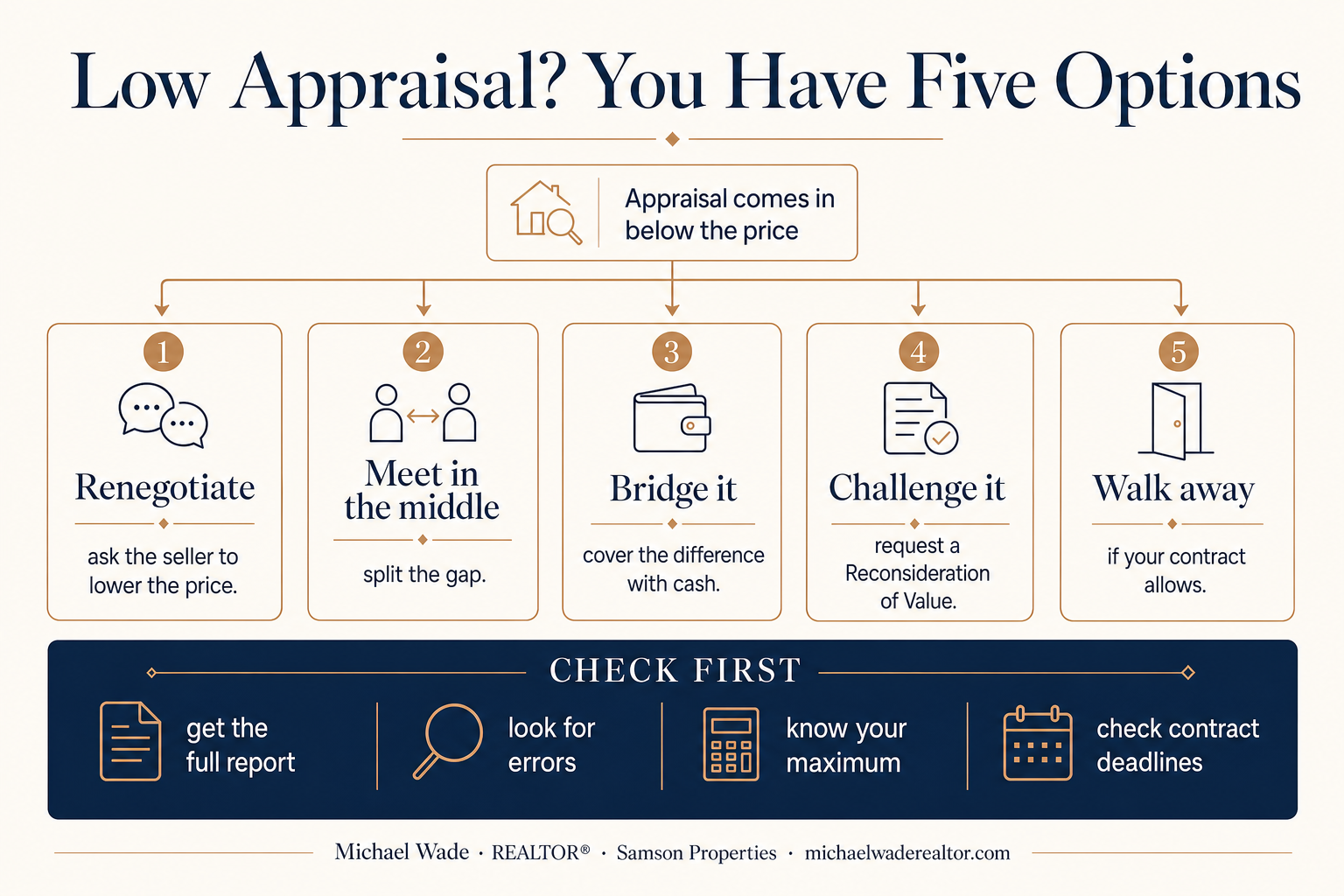
Your usual options
- Ask the seller to lower the price. Many contracts give the buyer this right. The Maryland REALTORS Conventional Financing Addendum, for example, includes a process where the buyer can ask the seller to reduce the price to the appraised value, and if the seller declines, the buyer can end the contract or proceed at the full price and cover the difference. [VERIFY: confirm current wording and timeframes with the form in the buyer's contract.]
- Meet in the middle. Sometimes the buyer brings some extra cash and the seller drops the price a little.
- Bridge the gap with cash. You pay the difference between the appraised value and the price out of pocket, on top of your down payment. This only works if you have the cash and still feel good about the price.
- Challenge the appraisal. Through your lender, you can submit a Reconsideration of Value with better comparable sales or corrections of factual errors, like wrong square footage. It doesn't always work, but sometimes it does.
- Walk away. If your contract has an appraisal or financing contingency and the timing is right, you may be able to end the contract and get your deposit back. Read your contract's deadlines carefully, since missing a notice date can change your options.
What I'd check first
- Get the full appraisal report from your lender. Read it for errors in square footage, bedroom and bathroom count, and missing upgrades.
- Look at the comparable sales the appraiser used. Are they close, recent and similar?
- Check how much room you have in your budget. Decide your maximum before you go back to the seller.
- Look at your contract: do you have an appraisal contingency, and what does it say about deadlines?
What about an appraisal gap clause?
In competitive situations, some buyers add a clause saying they'll cover a certain dollar amount if the appraisal is low. That's a real commitment. Only offer a gap you can truly afford, and talk it through with your lender, because loan type matters. Some loan programs have limits on how gaps are handled. Ask your lender before you include one. [VERIFY: loan-program rules on gaps.]
Can you avoid this?
Not completely, but you can lower the odds of surprise:
- Look at recent comparable sales with your agent before offering.
- Be honest with yourself about how much cash you'd put toward a gap.
- Keep some reserve after closing so a gap doesn't wipe you out.
Remember, a low appraisal can also be a useful warning. If several data points suggest the price is high, that's worth listening to.
Work with someone who explains it plainly
If you want help reading comps and building a plan before you make an offer, grab 15 minutes with me. You can also see the homes currently listed and the buyer process.
FAQ
Can I get a second appraisal?
Sometimes a lender will order a new one, but usually the process is a reconsideration through the original appraiser. Ask your lender what's allowed.
Do I get my earnest money back if the appraisal is low?
It depends on your contract and whether you followed its deadlines. Check with your agent right away.
Does a low appraisal mean the house is worth less?
It means the appraiser's opinion, based on available sales, is lower than the price. Opinions can differ.
Who pays for the appraisal?
Typically the buyer, as part of closing costs.
Is a low appraisal common?
It happens, and it's more likely when prices are moving quickly. I won't guess at a percentage without data. [VERIFY if you want to cite a stat.]
I'm a REALTOR(R), not a lender or appraiser. Your lender can explain your specific loan.
Recent Posts