Should I Fix Things Before Selling My House, or Sell It As-Is in Maryland?

Short answer: Fix the small, cheap, visible things and anything that affects safety or water. For big-ticket items, it's often smarter to price the house with them in mind than to renovate right before listing. Selling "as-is" is allowed in Maryland, but it doesn't erase your disclosure duties.
The fear behind this question is usually money: spending thousands and not getting it back. That's a fair worry. Let's sort it out.
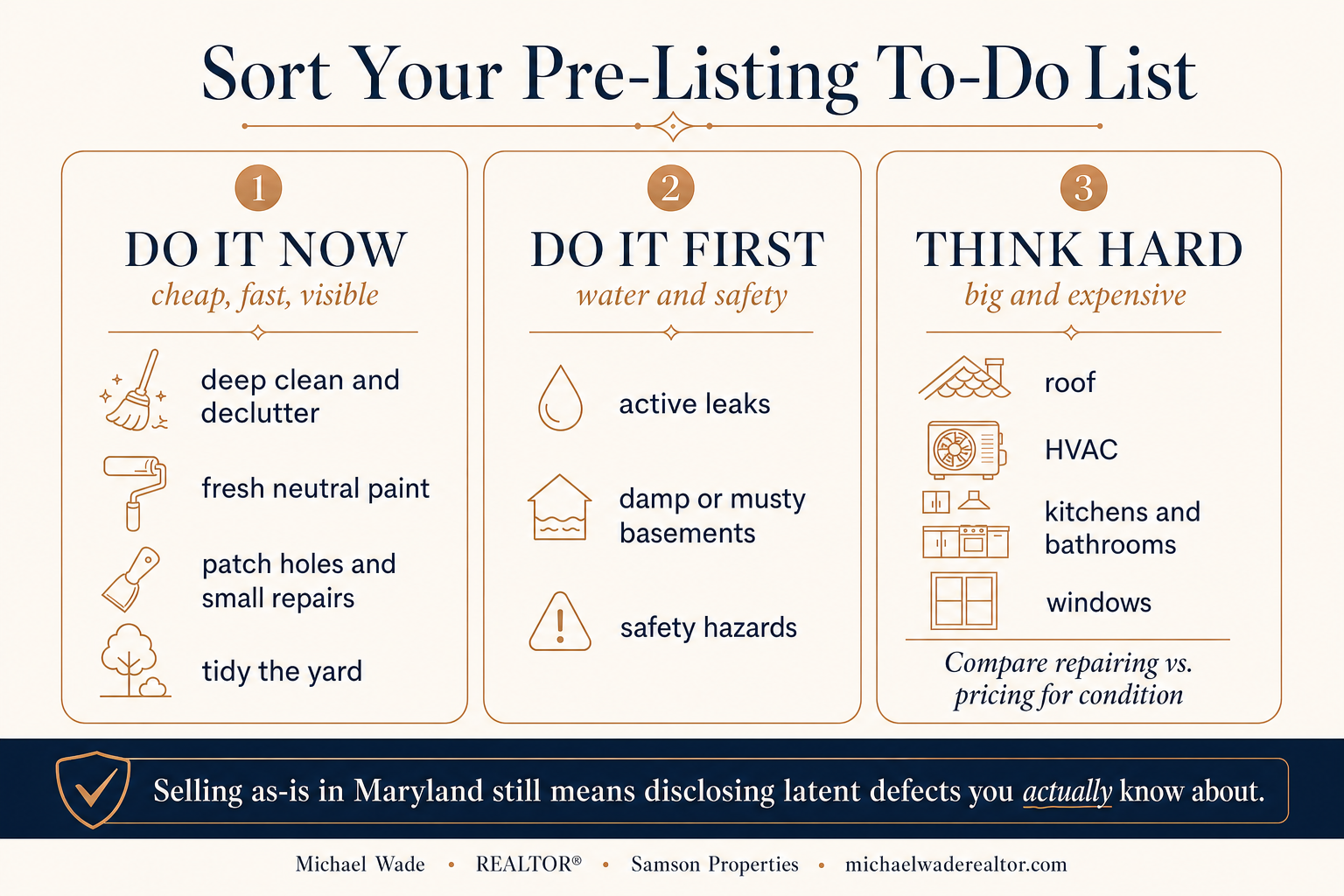
A simple way to sort your list
Do it: cheap, fast, visible.
- Deep clean and declutter
- Fresh neutral paint where rooms are worn or bold
- Patch holes, fix loose handles, burned-out bulbs, sticking doors
- Fix leaks, running toilets, and broken outlets
- Tidy the yard: mulch, trim, power wash
Sellers often tell me these small jobs changed how they felt about their own home too. They also tend to keep your inspection report shorter.
Think hard: big and expensive.
Roofs, HVAC, kitchens, bathrooms and windows. Renovations rarely return every dollar you put in. Whether it's worth it depends on your price range, your neighborhood and your timeline, so this is where a local pricing conversation helps. I'd rather show you comparable sales than guess.
Do it first: water and safety.
Active leaks, damp or musty basements, and safety hazards scare buyers and can sink deals. Buyers read these as risk. Dealing with them, or at least understanding the cost, is usually wise.
What "as-is" means in Maryland
Maryland requires most sellers of single-family homes (four units or fewer) to give buyers either:
- A disclosure statement, where you list known defects, or
- A disclaimer statement, where you say you're selling "as is" and make no promises about condition.
Even with the disclaimer, you still have to disclose latent defects you actually know about: material defects a buyer wouldn't reasonably spot, that pose a direct threat to health or safety. You don't have to hire someone to investigate, and the law covers what you actually know. (Source: Maryland Real Property Article 10-702.)
Maryland's standard contract also sells the property "as is" unless the contract says otherwise. Buyers can still add inspection rights through an addendum, so "as-is" doesn't always mean "no repair requests." [VERIFY: confirm with current Maryland REALTORS forms.]
I'm not an attorney. If you have a specific defect or question, talk to a real estate attorney.
Repairs vs. credits
When a buyer's inspection turns up issues, the Maryland REALTORS inspection notice lets a buyer request repairs and/or a credit, and the seller can agree to all, some or none. Credits can be easier than doing repairs on a deadline. The notice also says routine maintenance and cosmetic items aren't meant to be the focus of negotiations.
Should you get a pre-listing inspection?
It can help you price and plan, and you avoid surprises. But anything you learn, you may need to disclose or deal with, so talk it through before you order one. I'm happy to walk you through the pros and cons for your house.
How I'd decide, step by step
- Walk through the house like a buyer. Write down what you notice in the first minute.
- Sort into cheap and quick, big and costly, and water or safety.
- Get a couple of repair quotes for big items.
- Compare to recent sales of similar homes in different conditions.
- Decide: repair, credit, or price for condition.
Want to see what your home might sell for in its current condition? Request my Seller Pricing Analysis or a home valuation. Prefer to talk? Book a quick call.
FAQ
Do I have to fix everything the buyer's inspector finds?
No. You can agree to all, some or none of the requested items, depending on your contract. The buyer then decides how to respond.
Can I sell a house in Maryland with known problems?
Yes, if you disclose as required. Talk with an attorney about specifics.
Does selling as-is mean a lower price?
Not automatically. Price should reflect condition and market, which is why comparable sales matter.
Is staging worth it?
Often, simple decluttering and cleaning helps most. Full staging depends on the home.
What do I disclose about the neighborhood or past occupants?
Maryland's disclosure form focuses on the property's physical condition. Ask your agent or attorney about anything unusual.
I'm a REALTOR(R), not an attorney or contractor. Repair estimates should come from licensed professionals.
Recent Posts