What Are the Biggest Red Flags in a Home Inspection?

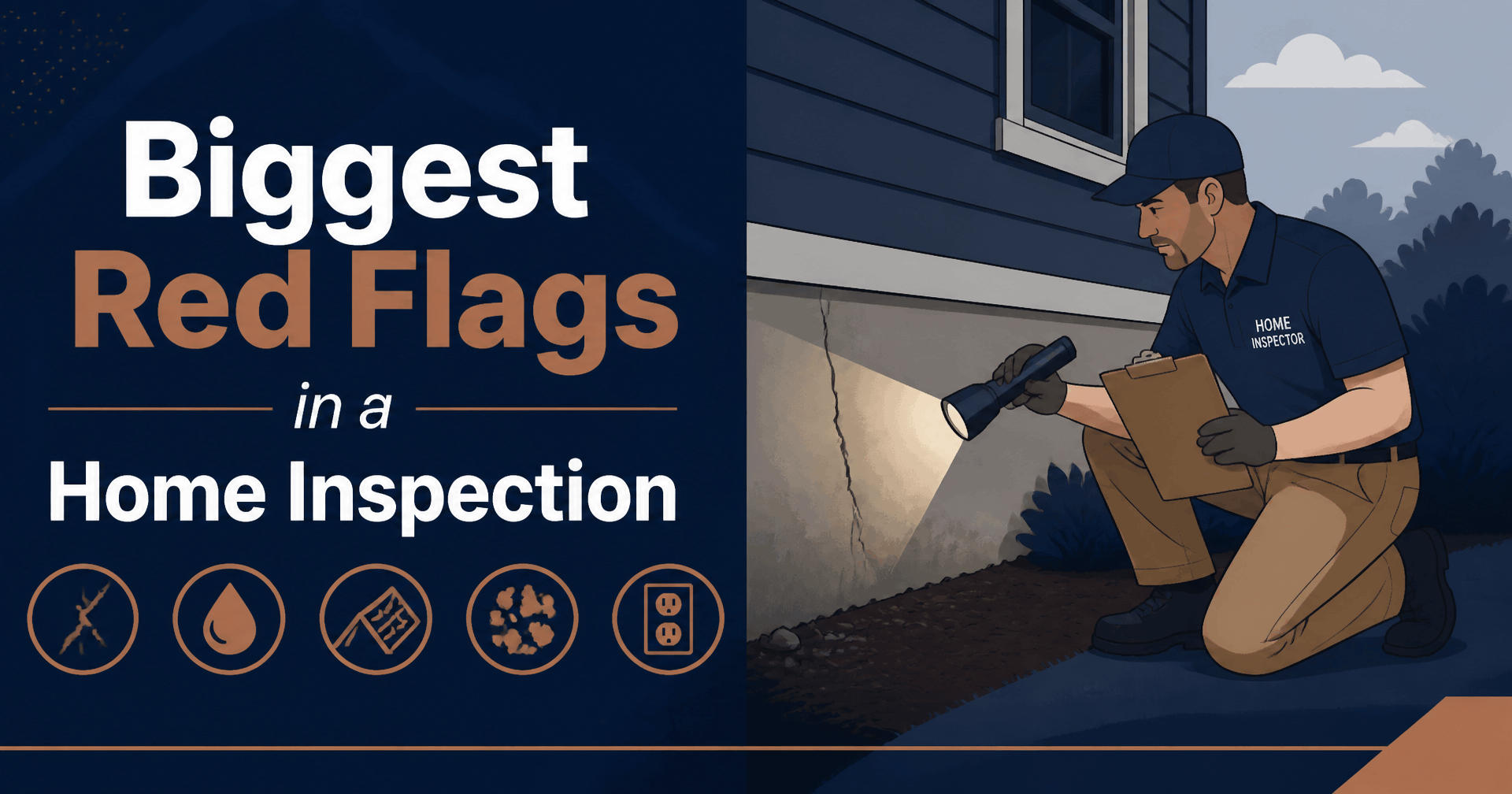
The biggest red flags are usually structural or foundation damage, signs of water intrusion, and safety problems in the electrical system or roof. Those can be expensive and tend to get worse over time. Most other findings are routine maintenance. A long report doesn't mean a bad house. A short list of serious items does deserve a pause.
The serious ones
- Foundation or structural damage. Wide or growing cracks, uneven floors, doors that stick, and signs of settlement. Fortune's inspection guide calls structural and foundation problems among the costliest because repairs tend to get more expensive the longer they wait. A structural engineer can give a real opinion.
- Water intrusion and moisture. Stains on ceilings or walls, musty smells, damp basements, and poor drainage around the house. Moisture can lead to rot and mold. See my posts on a damp basement.
- Roof problems. Damaged or aging roofing, failed flashing, and leaks. Roof issues are often the most common finding, so look at age and condition, not just whether there's a note.
- Electrical safety issues. Double-tapped breakers, improper grounding, older wiring, and missing GFCI protection in kitchens, bathrooms, garages, and outdoors.
- A cluster of related findings. Several small defects that point to one cause, like a leak or poor maintenance, are a bigger signal than any one item.
What's usually routine
Worn caulk, loose handrails, missing GFCI covers, a dirty HVAC filter, small cosmetic items, and age-related wear are normal. Ask your inspector to separate "safety or major cost" from "maintenance."
What inspectors don't look for
A standard inspection is visual and non-invasive. Inspectors aren't required to check:
- Areas that are blocked or not accessible, like behind walls or under heavy storage.
- Septic systems, wells, and underground sewer lines. A sewer scope is a separate add-on.
- Termites and other wood-destroying insects, mold testing, radon, and other specialized tests.
- Whether the home meets current building code, or how many years a roof has left.
If something worries you, ask about a specialist before your inspection window ends.
What to do if you find a red flag
- Read the summary, then the details. Ask the inspector what's urgent.
- Get a specialist's opinion for big items, like a roofer, engineer, or electrician. Treat any dollar numbers you find online as rough, not as quotes.
- Decide what you want: repairs, a credit, a price change, or to cancel.
- Act before your contingency deadline. Your agent can help you request what you need in writing.
FAQ
Is a long inspection report bad?
Not necessarily. Most reports list many small items.
What is the most common finding?
Roof issues are often cited as the most common.
Should I walk away over one big issue?
It depends on cost, your budget, and whether the seller will address it. It's your call, and I'll help you weigh the options.
Who pays for repairs?
It's negotiated. Sellers can repair, give a credit, reduce the price, or decline.
Do I need to attend the inspection?
It's worth it. You'll learn a lot walking through with the inspector.
Next step
Buying in Maryland or DC? Start with my buyer resources, or contact me. Want to talk it through? Grab a free 15-minute call at calendly.com/michaelwaderealtor/15min. No pressure.
Recent Posts